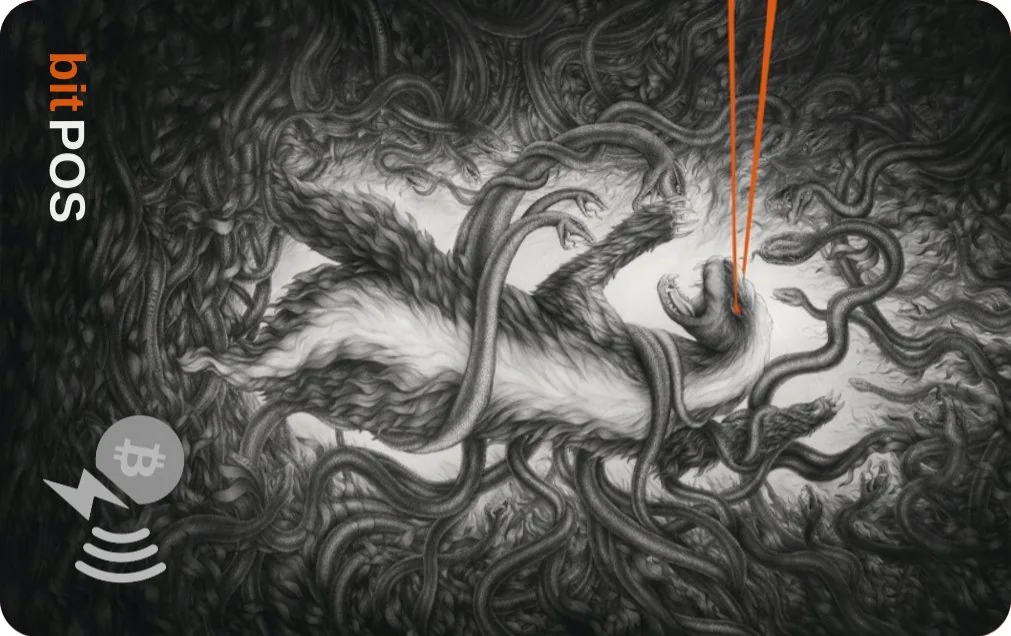
Bitcoin belongs at the counter. openLN is the open-source point of sale that puts it there: customers tap or scan, sats land in the merchant's own wallet.
The RIC is an always-on terminal that makes accepting bitcoin feel like any other payment: the same three moves, every time, no hesitation. Run as many RICs as you have counters, all on the same account.
It works both ways. Buy and sell bitcoin for cash, in person, with no extra setup.
Keypad and screen always ready. Same as any card terminal.
An openLN card, any Bolt Card, or any Lightning wallet by QR.
Their wallet, their keys. The same terminal also writes and wipes Bolt payment cards at the counter.
RIC · ESP32 · 2.8" touch · NFC · always on · $49

Design · O/W&W/O
Link an NTAG424 DNA card to your openLN account. Tap it at a RIC or any terminal that takes Bolt Cards. The payment comes from the wallet you control. Freeze or wipe it from the app.
Setting up a card yourself? Get the openLN Card Writer for Android ↓
openLN routes the payment and takes a routing fee, nothing more. The customer's sats lock to a hold invoice and land in the merchant's own wallet, settled in one motion.
Your wallet connects over Nostr Wallet Connect (NIP-47). openLN never holds your keys, and there is no openLN balance to withdraw. Payments pass through, only the routing fee is left behind.
Every claim on this page is verifiable. The code is public, the hardware is open and your keys are yours.
Platform under AGPL-3.0, firmware under MIT. Read it, build it, run your own.
github.com/openlnhq →Your account connects to your wallet over NIP-47. openLN routes payments; it never holds keys or balances.
how the money moves →ESP32 board, printed case, published build files. Assembled and sold by local partners.
build files →openLN, Thailand. Engineering and operations in one place, on sovereign infrastructure.
hello@openln.com →openLN connects to the Lightning wallet you already run: send and receive over Nostr Wallet Connect, connect Blink with an API key, point a Lightning Address at your account for receive-only, or connect CLINK codes from Lightning.Pub or ShockWallet, one for receive and one for send. Your keys, your sats, nothing to migrate.
Compatibility is by standard, not by brand: any NIP-47 wallet connects over Nostr Wallet Connect (send + receive), any Lightning Address connects receive-only with sales confirmed by openLN's wrapped settlement, any node backs an account through a Hub or bridge, Blink accounts connect with an API key, and CLINK codes from Lightning.Pub or ShockWallet cover receive and send. This wall lists only what connects today.
This is the live BTC Map: every pin is a real business that takes bitcoin. Thousands of counters worldwide, most of them on Lightning. Drag it, search your town, find who already takes sats.
When you take payments with a RIC at your shop, our team adds your business to BTC Map for free. Bitcoiners nearby find you, spend sats, and come back.
Bitcoin mass adoption is built locally, or not at all. openLN is the full stack for the people doing that work: open hardware, open software, the cards, and the rails. Partners keep 100% of every hardware sale and earn on every payment their devices route.
We build the tools. You build the economy.
A Lightning wallet and a phone. Create an openLN account, connect your wallet, and open the point of sale in your browser. Add a RIC when you want a dedicated terminal at the counter.
You do. Each payment goes straight to your own wallet. openLN never holds keys or balances and keeps only its 2% routing fee.
The RIC terminal is $49, with three tap cards in the box. Each payment carries a 2% routing fee.
They tap an openLN card or any Bolt Card on the RIC, or scan the QR code with any Lightning wallet.
Any wallet that supports Nostr Wallet Connect, a Blink account, or a Lightning Address for receive-only payments. When your wallet provider cannot verify a payment itself, openLN confirms the sale for you. The full list is under Wallets.
No. They type the amount, like on any card terminal. The customer does the rest.
Yes. The platform is AGPL-3.0 and the firmware is MIT. Read it, build it, run your own.